The Wreck of the Cali

James and I explored a ghost ship. Just one of the 325 wrecks that can be found all around the coasts of the Cayman Islands and particularly Grand Cayman. Testament to the sea fairing history of these islands and the dangers that the maritime life poses.

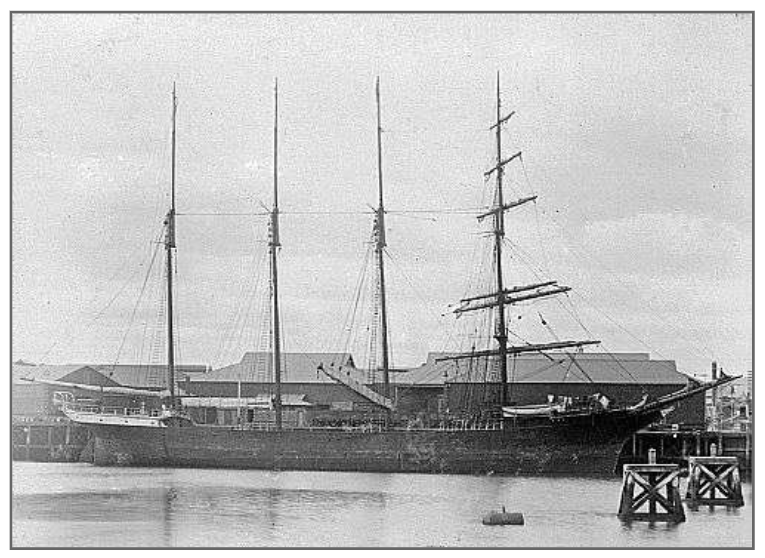
The originally named the ‘HAWAII’, our ghost ship was built in 1900 by A. McMillan & Sons Ltd. of Dumbartonshire.

She was, in life, a 220 foot long, four masted barquentine. A steel schooner. These ships, in their day, were the cutting edge of technology. Travelling all around the globe. Crucial to world trade. They must have been stunning to see, the last great sailing ships, the pinnacle of their evolutionary family the last of their kind before their extinction and the birth of modern engine driven ships.

A. McMillan & Sons most famous ship was the Hawaii’s sister ship, another four masted barquentine, called the Swanhilda. Launched in 1890. In 1899 the Swanhilda left Spencer’s Gulf near Adelaide, South Australia, with a cargo of grain. She sailed eastwards across the Pacific, rounded Cape Horn and sailed up the Atlantic to Britain in 66 days. A world record that has never beaten!

The Hawaii plied her trade in the Atlantic and Caribbean for nearly 50 years under many different names. In 1933 she was sold to Mexican owners and renamed HIDALGO. In 1946 she was sold again this time to Colombian owners and renamed CALI.

This slideshow requires JavaScript.

After nearly half a century on the 9th January 1948, whilst carrying a cargo of 30,000 bags of rice, the Cali developed a leak. In a desperate effort to prevent her from sinking at sea the crew made for the safety of the Cayman Islands. Here in a last-ditch effort to save her she was deliberately run ashore at George Town.

But fate did not spare her. There in sight of land and safety the stricken Cali caught fire, burnt down to her waterline and sank.

The wreck of the Cali now lies less than 40 yards off shore near Central George Town.

She lies in 20-30 feet of water adjacent to a small reef that teems with fish.

The wreck and reef are home to huge tarpon.

The Cali is gradually becoming part of the reef as nature claims her.

Hawksbill and Green

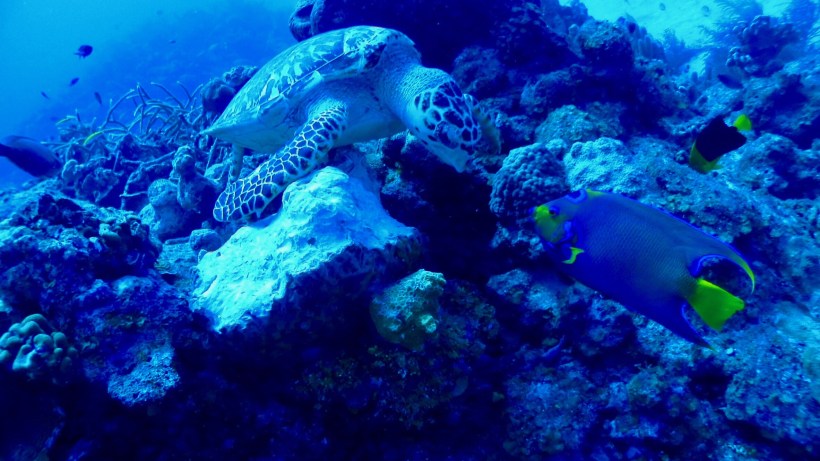
The Green turtle (Chelonia mydas) and Hawksbill turtle (Eretmochelys imbricata) both belong to the family Cheloniidae and both can be found in Caribbean waters.

The Green Turtle is classed as an endangered species. The Hawksbill Turtle on the other hand is critically endangered. A species on the brink of extinction. So you can only imagine what a thrill it has been to see several of them at different locations while out diving.

On four occasions now James and I have had the distinct privilege to swim with these lovely animals in the wild and this week we found number five!

Smaller than some of their cousins the Hawksbill has a beak that looks, well, like a hawks bill. Hence the name. The back of their shell has a jagged appearance almost like feathers or a saw blade and the sections of their shells are less defined and smoother than other species. A feature of age.

They are a very placid and curious breed who don’t seem to mind the presence of divers and tolerate our intrusion with gentle good humour. Much like their green cousins in this. Making encounters with either species a pure pleasure and thrill.

King Fish and Silver Sides

Just outside the centre of George Town, as you head south down Church Street, on the waterfront, looking west out over the sea, sits the Eden Rock Dive Centre.

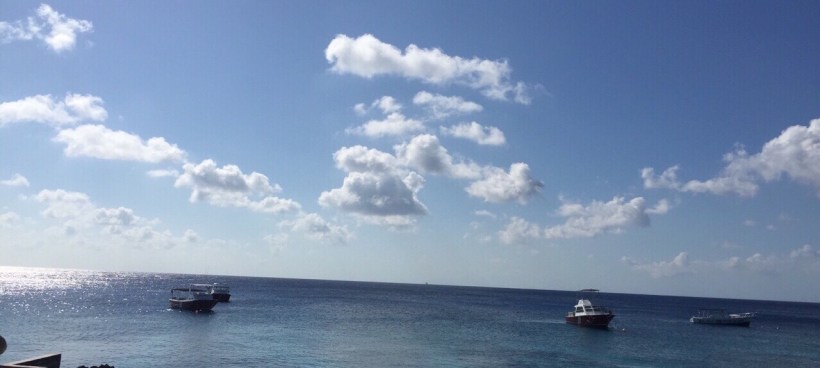
On a bright sunny day and let’s face it that is most days, the view is stunning.

The sea sparkles. A patchwork of emerald green and pale blue. Millpond flat it reflects the sun and the startling blue sky.

As you look towards the horizon the sea darkens to a deeper and deeper blue. Near black. It looks utterly serene.

Slipping into the sea and below the surface you enter the blue and green world.

Fish of every colour flit around among the fan coral.

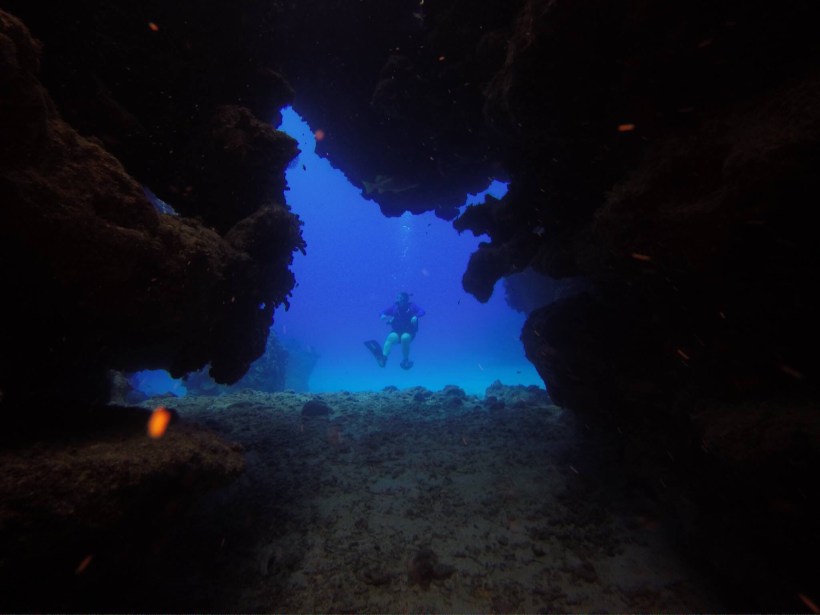
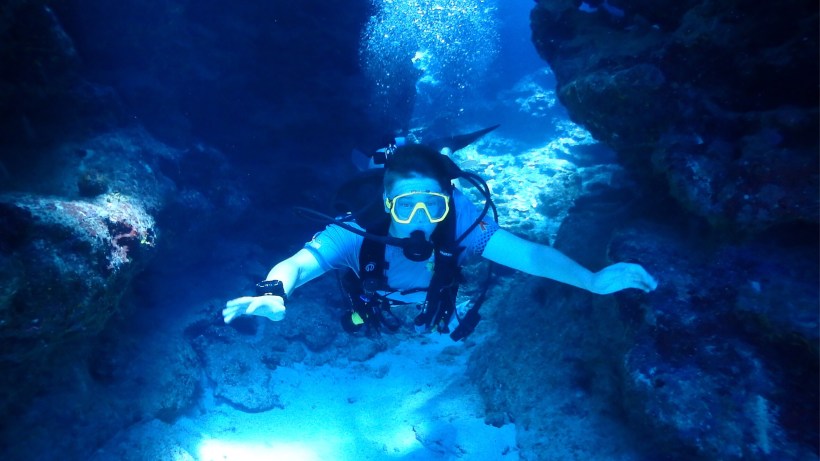
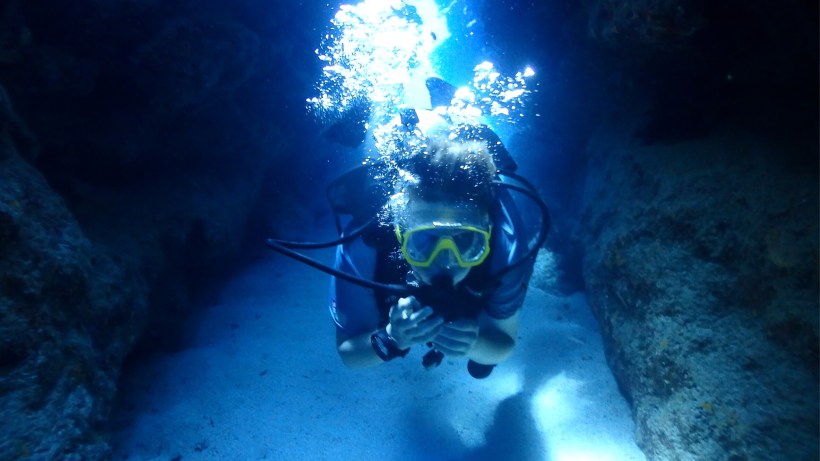
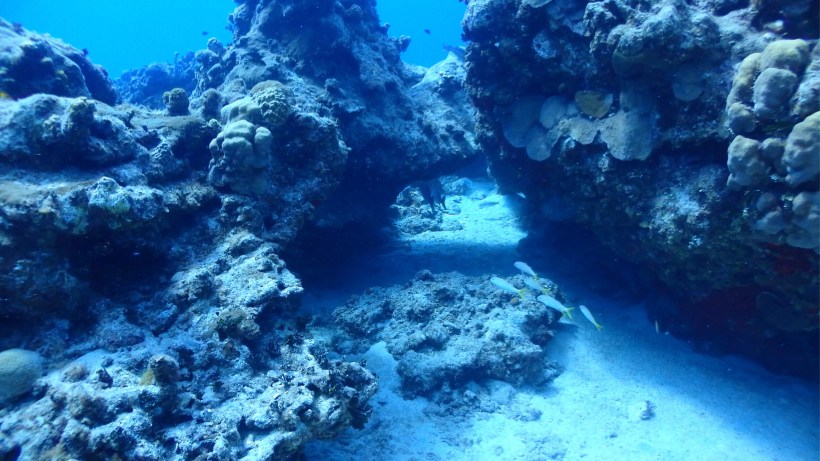
Moving away from the shore the sea bed slopes gently down until it meets the reef proper. Here you find the skylights. Holes in the reef dropping down into the grottos below.

OLYMPUS DIGITAL CAMERA

This slideshow requires JavaScript.

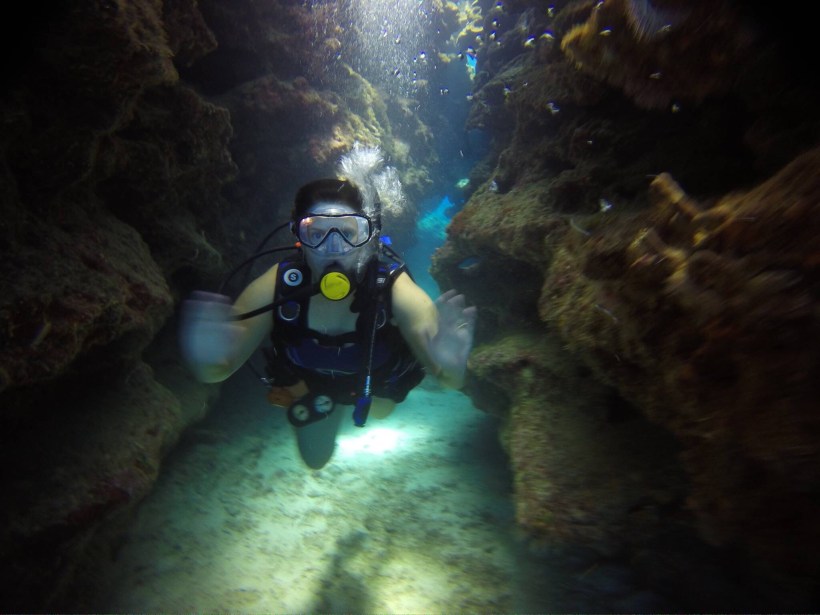
You slip down through a skylight. Drifting down into the grottoes. Twilight tunnels illuminated only by the blue tinged sunlight streaming down through the skylights above. The stained glass light falling into a silent cathedral cloister space. The water motionless. Still. The silt undisturbed by even the slightest current.

In this silent still place float ghosts.

Motionless.

Hanging.

Waiting.

As still as statues.

As patient as stone. As old as stone.

The sun streams into their cathedral hallows glinting on their great armour scales.

Mirror bright. Shinning like polished silver.

Sentinals.

Templar Knights.

This slideshow requires JavaScript.

Some alone others in large groups. Their bodies ranging from two or three feet in length to six-foot giants.

The Caribbean King Fish or Silver King.

Tarpon.

A truly ancient fish. Older than the grottoes they inhabitant. Old when the reefs that these twilight tunnels penetrate were new.

As you pass them they barely move. Completely unafraid of the divers who visit their grottoes. You can reach out and touch their great silver flanks or tails and they hardly flinch.

A mere twitch and they move aside and let you pass.

Resuming once again their motionless vigil.

Waiting.

In late Spring change comes.

The stillness comes alive.

Swarms.

The empty grottoes fill with life.  Millions of Atlantic Silversides appear.

Atheriniformes.

Tiny sparkling silver fish forming living curtains.

Pulsating.

Swirling and parting like magic for the great tarpon as they swim back and forth through the clouds. Feasting on the glut.

The wait over for another year.

This slideshow requires JavaScript.