As parents we can hope for nothing better for our children than to see them become happy confident individuals who meet the world on their own terms unafraid to rebel and to challenge stereotypes!
I could not be prouder as a parent that my intelligent, beautiful daughter is just such a spirit.
Prom tonight. Stunning and laughing at the world. Poppy and her best friend daring to be different and super cool!
Well what a weekend! We have spent every minute out in the fresh air and sunshine.
We left the house Saturday morning and headed up to Seven Mile Beach for the annual Flowers Sea Swim. An open water event in the turquoise waters along the western edge of Grand Cayman.
Conditions were perfect and while obviously not in the race (the Olympic swimmers and local swimming clubs have that sewn up) we did finish in very respectable times and both managed new personal bests!
Quick change in the car park and still salty we headed to Camana Bay and hopped on the taxi (a speed boat) to Kaibo with Ali and Eli for dinner upstairs. We sat outside on the balcony overlooking the beach.
Cocktails and an eight course tasting menu ensued and perhaps the nicest meal we have had here in Cayman. If you ever get the chance I highly recommend it!
Sated, salty and sleepy we headed back across the North Sound by boat. Wind in our hair we were treated to a beautiful starry sky.
Sunday morning and off to Coconut Joe’s for a Fathers Day breakfast.
Back home grabbed my dive bag and headed up to Latern Point to and Dive Tech to meet Toby so we could complete the practical part of our SDI Solo Diver Course.
Kitted out like astronauts with extra air tanks we completed a series of underwater drills and proficiency tests. The last of which we had to pause mid exercise.
We were hanging in mid water fifty feet down and about 10 meters from the mini wall. We had successfully switched to our alternate air supplies and were about to deploy surface marker buoys when an ancient loggerhead turtle swam past us.
Time stood still as this living relic of the age of the dinosaurs appeared and swam slowly past us only two or three meters away. A truly historic animal it’s massive shell covered in barnacles. We held our breaths a hovered motionless as it swam slowly past almost close enough to touch.
A once in a life time encounter with a truly stunning animal.
We surfaced on a high qualified as Solo Divers
Another quick change in a car park and off to Poppy’a annual artistic swimming show. An evening of glittering costumes, banging tunes and amazing talent.
Here in Grand Cayman the expanse of pristine white sand that runs for nearly seven miles along the western edge of the island is perhaps the islands premiere tourist attraction. Along the beach lie most of the islands four and five star resorts.
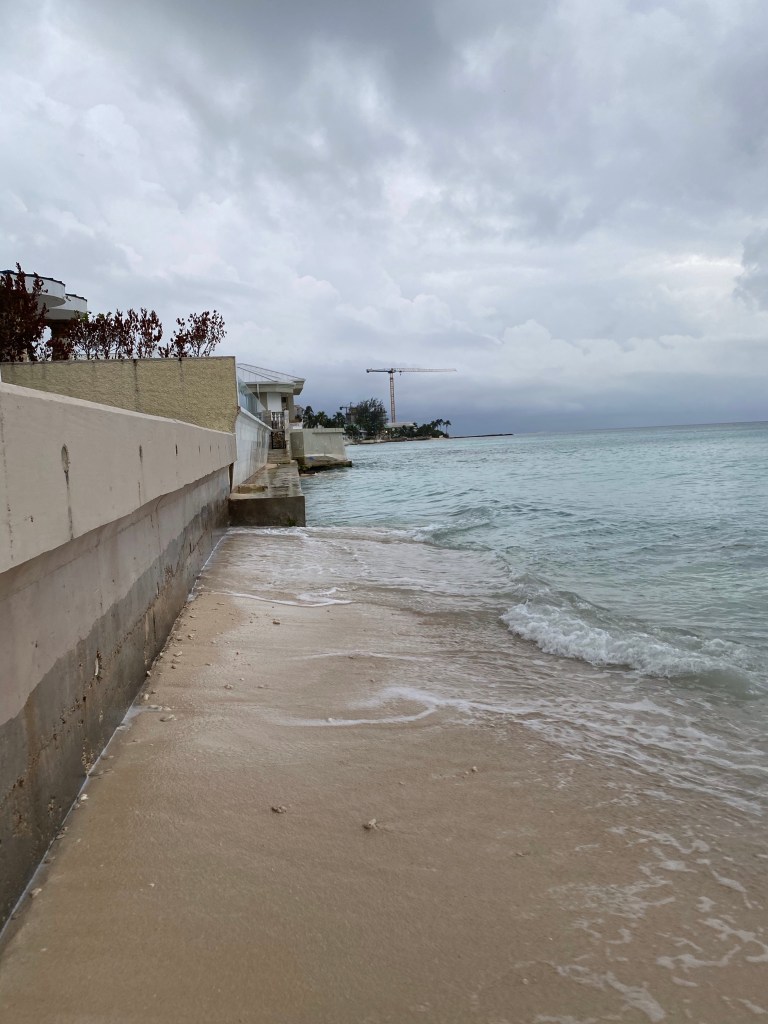
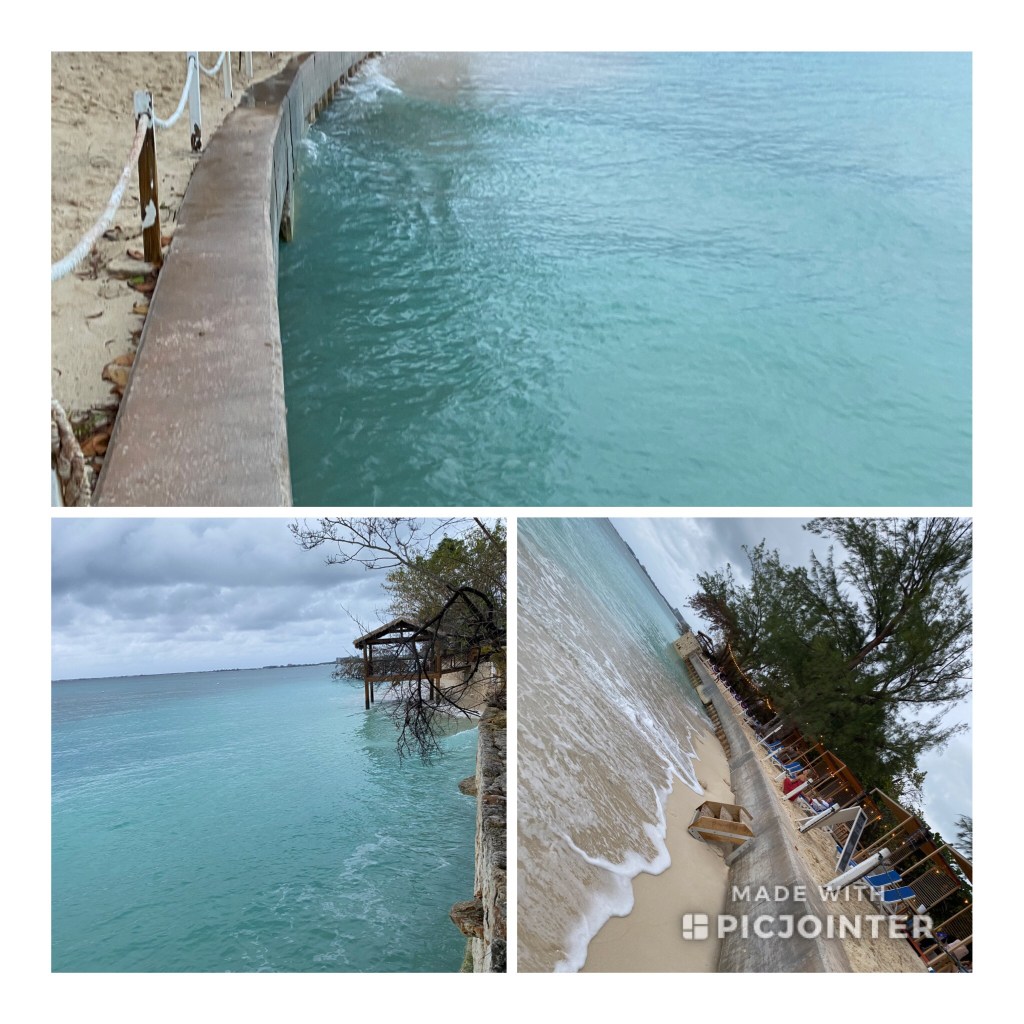
In the last few weeks however the beach has changed. Successive storms have caused major beach erosion and scoured much of the famous beach away.
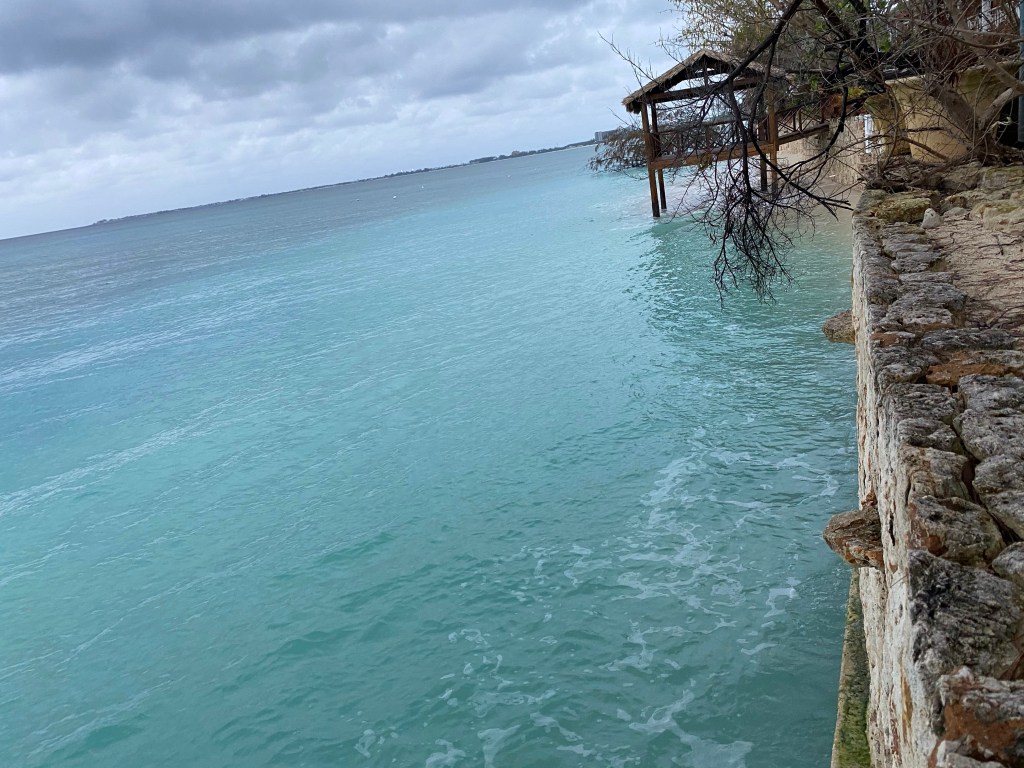
These palm trees have been undercut this is the last piece of the southern end of the beach that remains.
From its southern end for about two miles to the north the beach is almost completely gone! Replaced instead by the sea which at the point it meets the wall is now several feet deep. In place five to six feet deep.
Looking south the beach from The Royal Palms to the Margarita Ville is gone!The Coral Club (formerly Coral Beach Club)
Building in the last ten years has encroached on the high tide mark, this has meant that during Nor Westors and storms high waves collide with these wall. Where in the past waves would have run up past the tide line and deposited their load of sand further up the beach the waves now hit the walls and roll back with almost full force carrying their load of sand out to sea.
The spot only three weeks ago used to look down onto a beach. It was the start line for the Flowers Sea Swim.
This process of scouring has accelerated over the last few years as more walls and buildings have been built along the beaches edge. Particularly at the southern end. Where the beach used to be two or thirty meters wide it reduced and reduced and now in many places is gone.
Local land marks like the Royal Palms Beach Club are being lost.
In the case of Royal Palms the beach club is in danger of collapsing altogether. The Coral Beach Club has no beach and nor does the Marriott Hotel.
The Royal Palms Club House collapsing.
In the past, at the end of storm season the sand would be driven up the beach deposited. It could be raked back and the beach repaired using a couple of tractors or JCBs. But now where the walls are the sand is carried out to sea and along the coast.
The process of repairing the beach has now become a major civil engineering project, one that could cost hundreds of thousands of dollars, if not millions.
Instead of a simple repair as in the past this year the erosion has reached a tipping point and now restoring the beach will have to involve dredging or importing thousands of tonnes of sand. Going forward beach defences and groynes will need to be installed.
But in the meantime Seven Mile Beach will need to be renamed Five Mile Beach.
Here is a little reminder of what was here. Drone footage starting at Royal Palms…
The Harvest Moon signals the time of the mass spawning of Coral all over the Caribbean Sea.
It is an event that only takes place at night.
So last night and again tonight we slipped beneath dark waves to hover weightless in space.
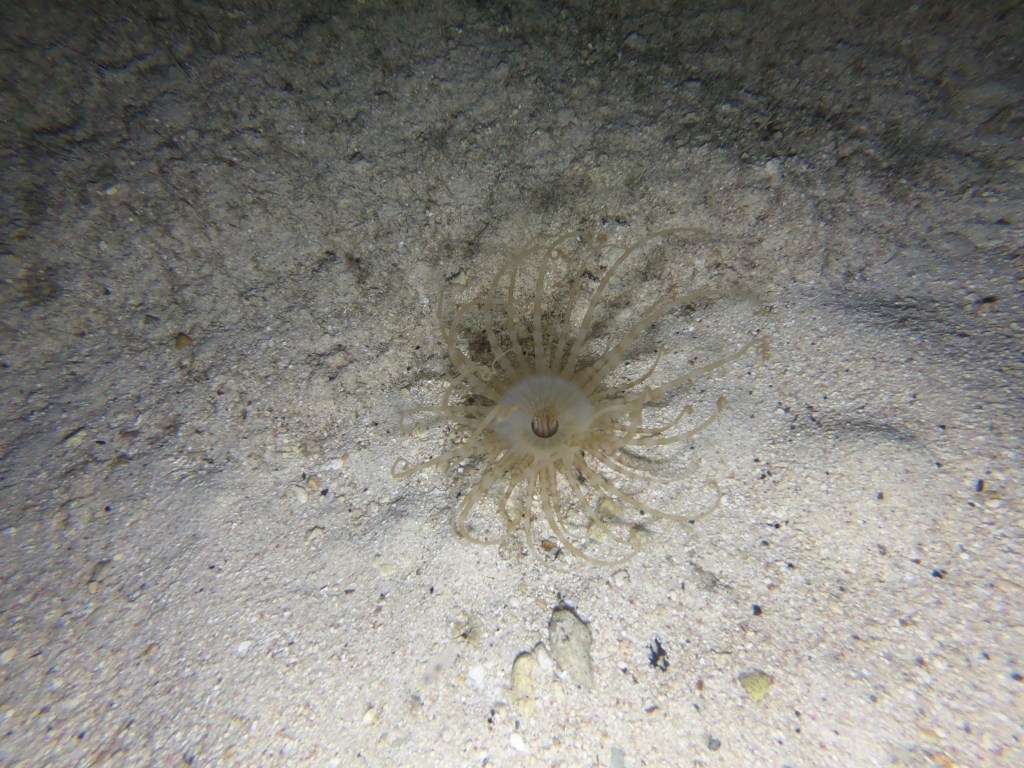
It’s was like visiting a strange alien world full of mysterious creatures.
The search lightsColours only seen under UV lightsAlien monsters
To the uninitiated the idea of diving at night may seem terrifying but once you get past the initial panic of the first dive subsequent dives are just amazing.
In an octopus’s garden under the sea.
Crab is back on the menu.
There be mermaids.
Night diving is just wonderful. It’s like a strange dreamland.
A couple of weeks ago an email popped into my inbox advertising a day trip to Little Cayman. A day of diving the world famous Bloody Bay Wall.
Now normally there are only two ways to get to Little Cayman.
The first, by plane would get you there OK but after diving you should not fly for 18 to 24 hours. Being at high altitude after diving can cause the residual nitrogen in your blood to give you the bends and this can cause all sorts of serious problems like muscle aches, embolism and death.
The second is on the Cayman Aggressor. A live aboard dive boat that offers a week long cruise around all three islands. Now it is on my list of things to do but it is hardly a day trip.
This, therefore was something new.
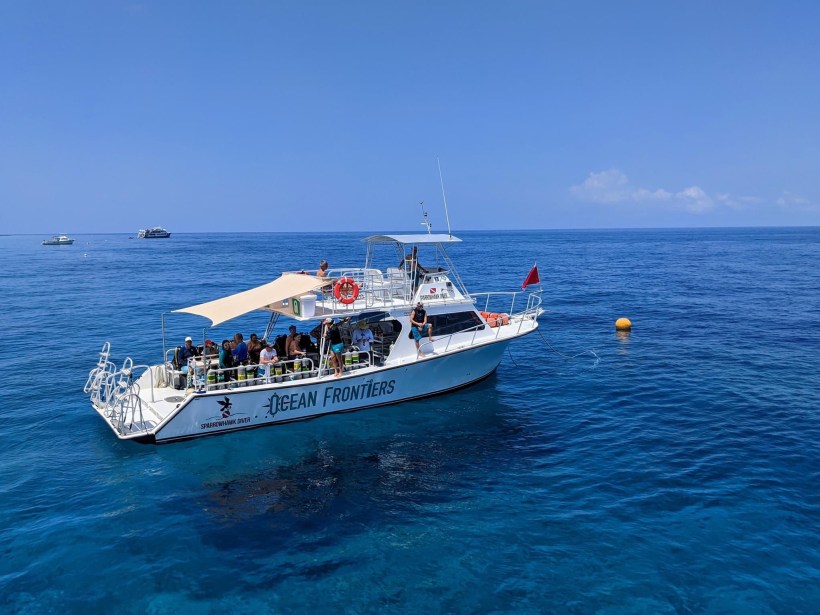
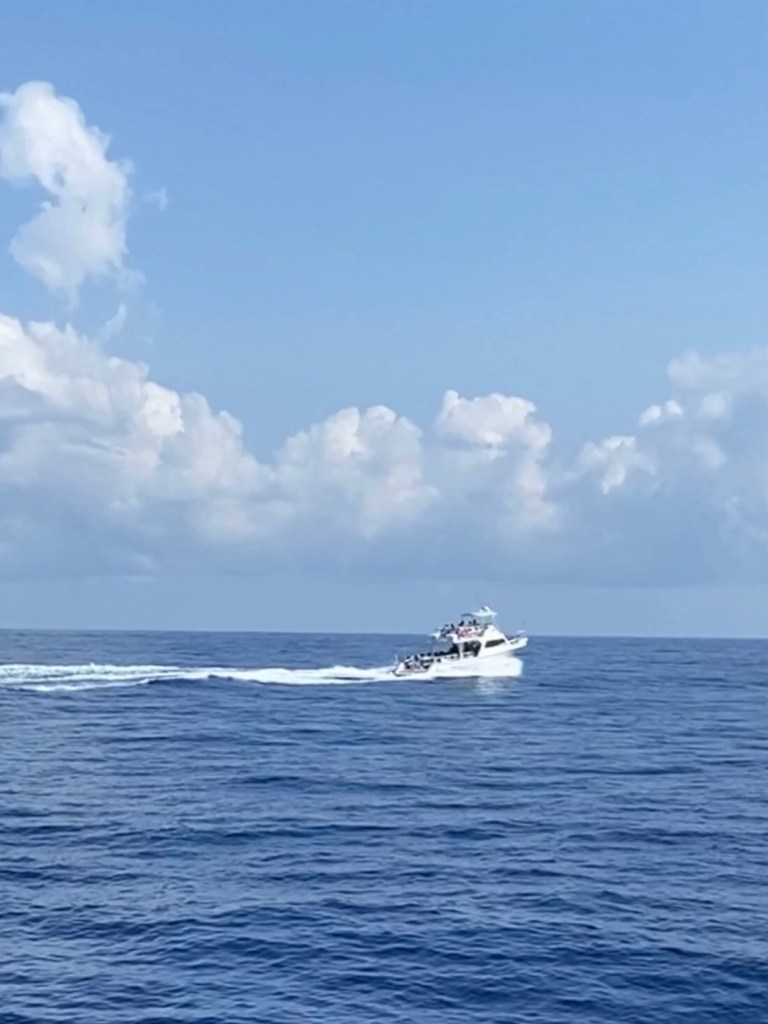
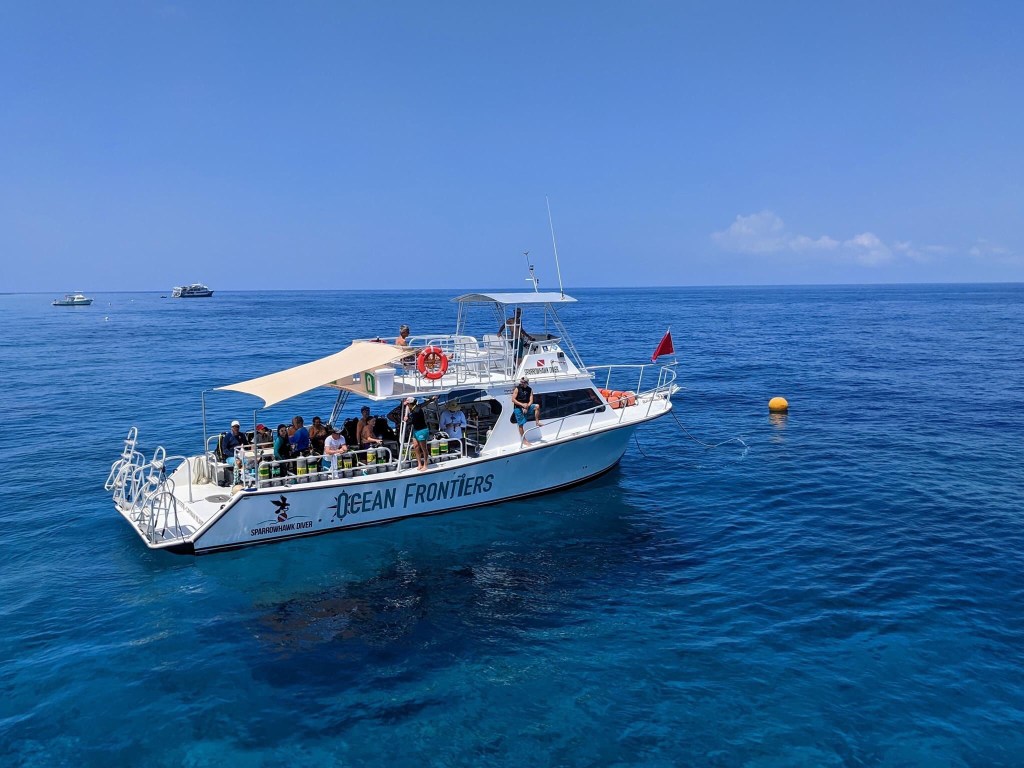
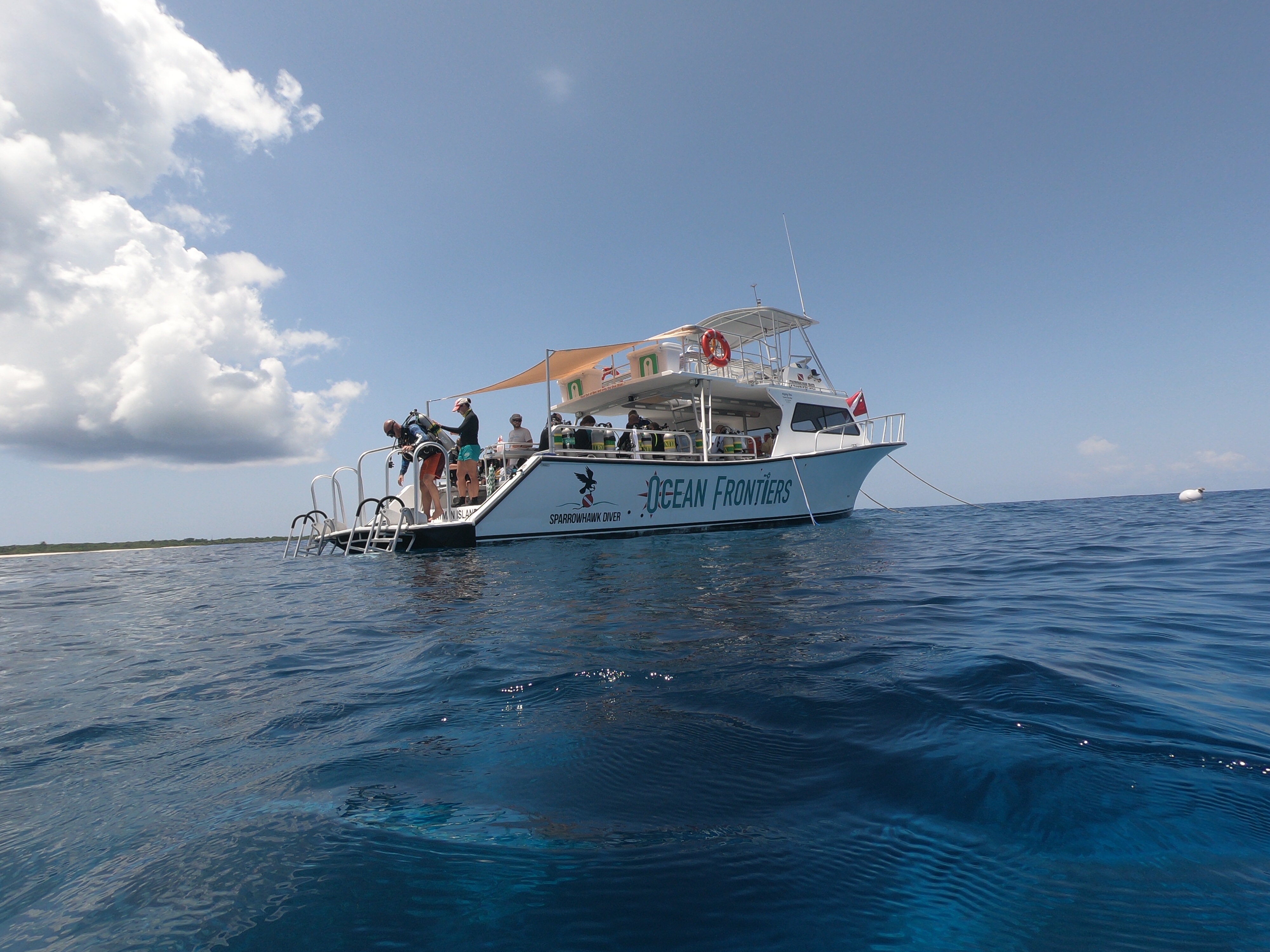
The proposal was to set out from Ocean Frontiers on their 46ft Newton speedboat and cross the 70 miles of open water between Grand and Little, undertake three dives and then head back the same day.
Three dives in rapid succession with tight surface intervals. Air would not cut it only Nitrox, or enriched air would do.
Enriched air or Nitrox has 10% more oxygen than our atmosphere, that’s a third more than normal, it helps prevent nitrogen build up and reduces the risk of getting bent.
Air =21% oxygen, Nitrox=32% oxygen. This is the normal mix ratio in recreational diving. You can get higher mixes buts real specialist diving so for this explanation 32% works.
Divers had to be Nitrox certified.
Well I am, I did the course two weeks ago!
Serendipity.
I didn’t even think about it. I hit reply and applied for a place. Bang to flash, about 15 seconds. I then emailed a few of my friends to make sure they knew about it.
Two tense but busy days of waiting later I got an email to say I had a place. The email went on to say that demand had been so high that space in the boat had gone in under an hour. They had laid on a second boat. It also filled the same day.
The communications with Ocean Frontiers made it clear that the trip was not for the faint hearted. We would be a long way from help if anything went wrong and plenty could. It is after all Hurricane Season and we have been experiencing wicked little flash storms arriving out of clear skies for weeks. For this trip to happen a lot of things had to go right.
4:30am Sunday morning arrived. My kit had been packed the night before so grabbing this I headed out and met a Toby, my dive buddy, and we set out for the East End and adventure.
As we drove along by he sea we could not help but note as the sky lightened how calm the sea was. It was like glass in the dim dawn light. Not a single wave not a breath of wind.
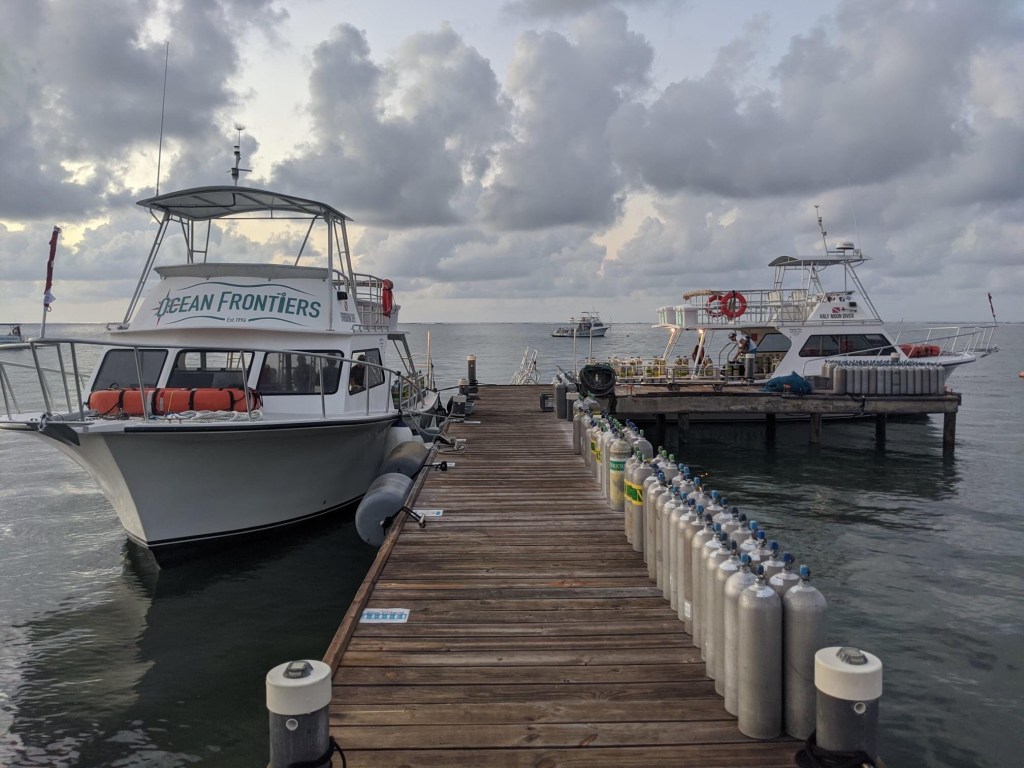
We arrived at 6am to be greeted by fresh brewed Colombian Coffee and jumped aboard our designated boat. We set up our kit and then sat back to watch he sunrise.
Sparrow HawkHalf Moon DiverSunrise at East a EndMy buddy Toby
At 6:30am we pushed away from the dock and got under way. The crew served more coffee and mini pastries and we sat and watched the sea roll by.
Cayman fell away behind us shrinking to a black line on the horizon and then disappeared. We were out of sight of land racing over some of the deepest water in the world in two small boats under an endless sky.
About an hour and a half into our crossing we were joined by a pod of bottle nose dolphins who played in the boat’s wake and swam alongside us for a while but our 20 knots speed meant they could not match us for long and soon they fell behind and once again we had the world to ourselves.
At half nine a cloud appeared on the horizon and below it a line on the horizon. We could see Little Cayman. On both boats we crowed onto the top deck to watch our destination draw closer.
Land ho!
The crossing had been better than hoped for, the conditions ideal. We had our first dive briefings as we crossed so as not to waste time when we reached our destination.
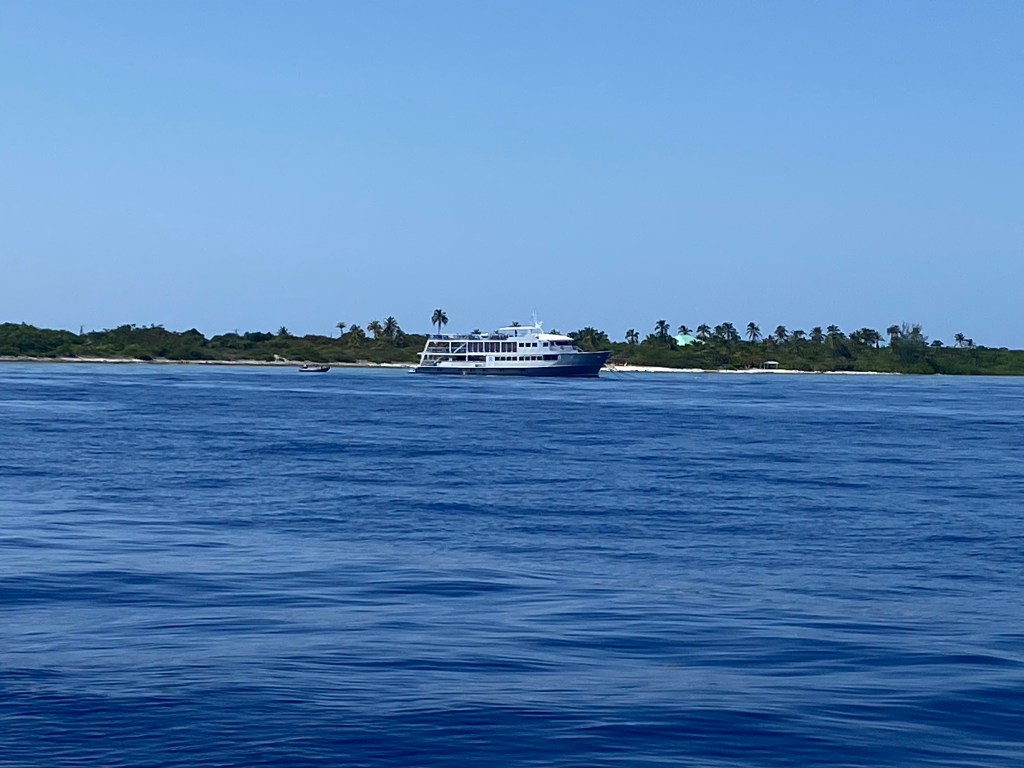
Ahead of us we could see the Central Caribbean Marine Institute dive boat and the Cayman Aggressor making preparations for their first dive of the day. Into this idilic scene came racing our boats. Two marauding dive boats charging at full pelt into their blissful morning.
The Cayman Aggressor – luxury live aboard diving!
I think the only way we could have made more of a spectacle of our arrival was if we had been blasting out Ride if Valkyries as we hurtled in.
We had all begun putting on our gear ready for a quick start while still a couple of miles out while the boat was still going at full tilt. Buddy checks done we were ready.
The captain killed the engine and we literally piled off the back of the boats and into the crystal sea and straight over the wall.
It was stunning.
I thought diving in Grand Cayman was beautiful, and it is, but it pales in comparison to the pristine reef and waters that surround its little sister.
Vivid colours, far greater coral coverage, far bigger corals and sponges that were huge.
On Grand whip corals are about as thick as your arm, here they are as thick as you torso.
And the fish! Teaming, the waters are alive. Hundreds and hundreds of conch, the ubiquitous giant sea snails, meandered sedately over the sea bed at the top of the wall.
Our first dive was Randy’s Gazebo. We dropped vertically down through a chimney, narrow, tight and dark emerging 80ft down on the bloody bay wall. We swam through a coral arch and along the face of the wall before returning, reluctantly, to the boat.
While we were underwater the crew deployed shade sails turning the boat into the perfect spot to relax on a sunny day.
Shade sail deployed
A 45 minute surface interval ensued more coffee and the boat manoeuvred to our next site. Nancy’s Cup of Tea (no I don’t know who thinks of these names).
Giant sponges
We dropped into 13ft of water and slipped over the wall. We were immediately caught by a very strong current a and swept along the reef face.
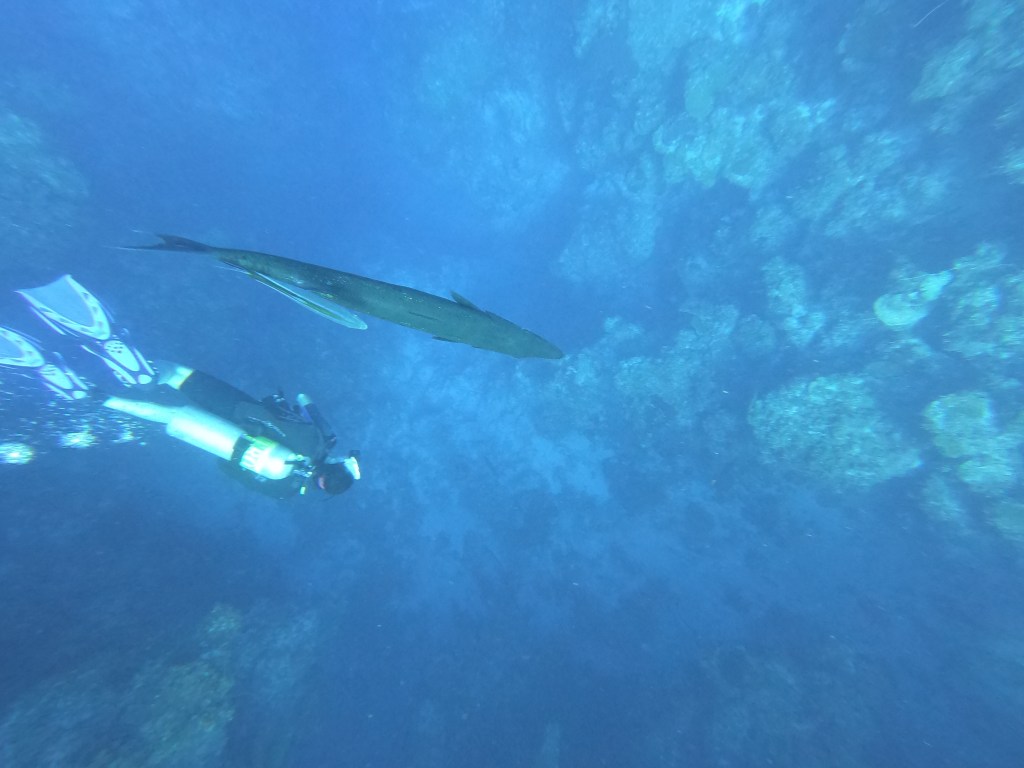
We were joined by a Caribbean Reef Shark, a huge black barracuda. The latter a monster of a fish who gave us all pause as these buggers can be aggressive, unlike the sharks. However I chased him away when he was getting too close.
Caribbean Reef Shark on Bloody Bay Wall
We bobbed along like balloons for a while just enjoying the scenery before once again shallowing up and then making our way back against the current to the boat. It was like fighting a gale!
Once back on deck we readied for dive three and as a group revised our dive plan, instead of heading to the eastern end of the wall we would go west and drop back into the current and do a drift dive letting the current do all the work.
Normally, the boat moors up and you do a circular swim that brings you back to the boat, in a drift dive you drop into the current and let it carry you. The boat follows on the surface and picks you up at the end wherever you surface.
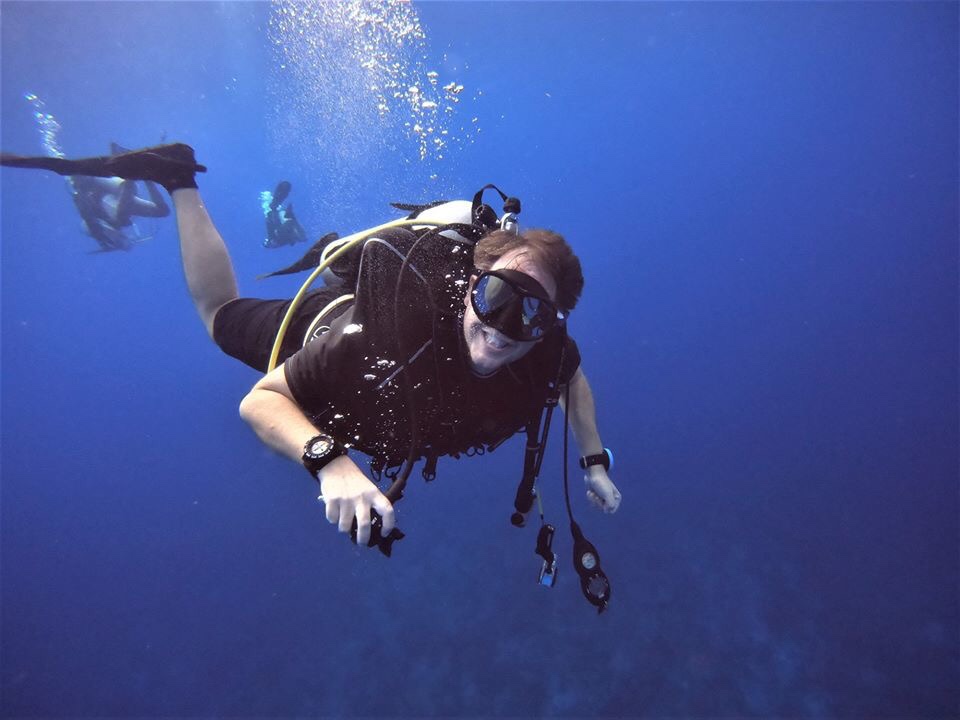
We dropped off the boat and onto the face of the wall. We hovered at 60ft down over 6000ft of water and off we went!
Five world class sites in one dive! Three sharks it was stunning.
A seven footer
We were picked up by the boat, elated and with the last diver on board we set off back to Grand tired but very happy.
Aloha
What an adventure, we were looked after from start to finish. The team on the boat really took customer care to the next level. The diving at Little Cayman and on The Bloody Bay Wall was world class. The trip to Little Cayman was amazing. A fantastic day.
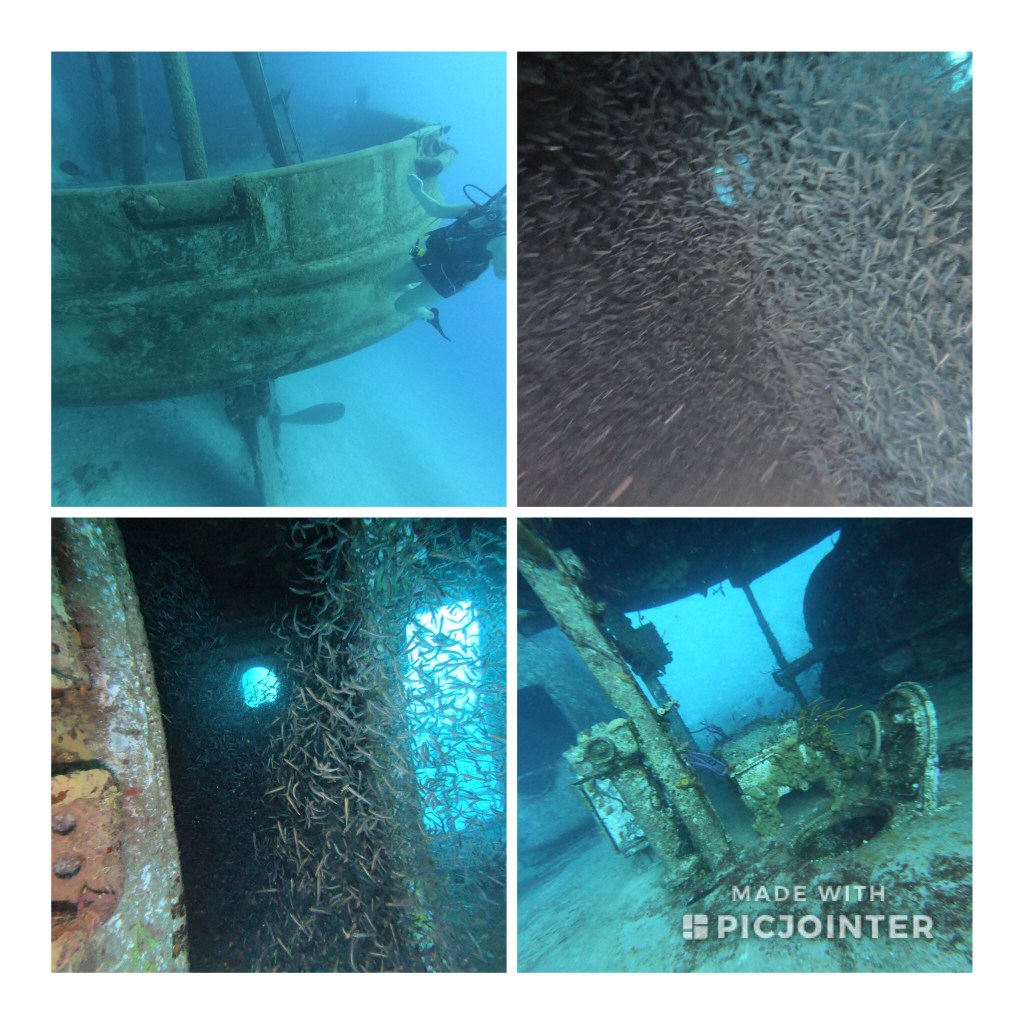
We jumped on the one of the new boats at Sunset House and headed out to the Kittiwake with Victoria, Toby and Ty.
It was raining. I can report we were wetter on the surface than under the water!
The first dive was great and as an added bonus we were treated to Silversides.
Silversides in the wreck of the KittiwakeCourtesy of Ty
A really nice dive. Our second dive was to the Ora Verde. This is the wreck of a sunken banana boat scuttled by its crew after the captain refused to share the profit from an illicit second cargo…
Ora Verde – picture by TyPicture by Ty
Here the benefits of Nitrox really became clear. We were able to dive for nearly an hour at 50ft.
We would have run out of air long before we reached our decompression limits!
By Ty
We found green moray eels and my personal favourite A drum fish!
The Reads on a mission Nitrox
By the time we got back the weather had cleared up enough for a beer and to watch the sunset.
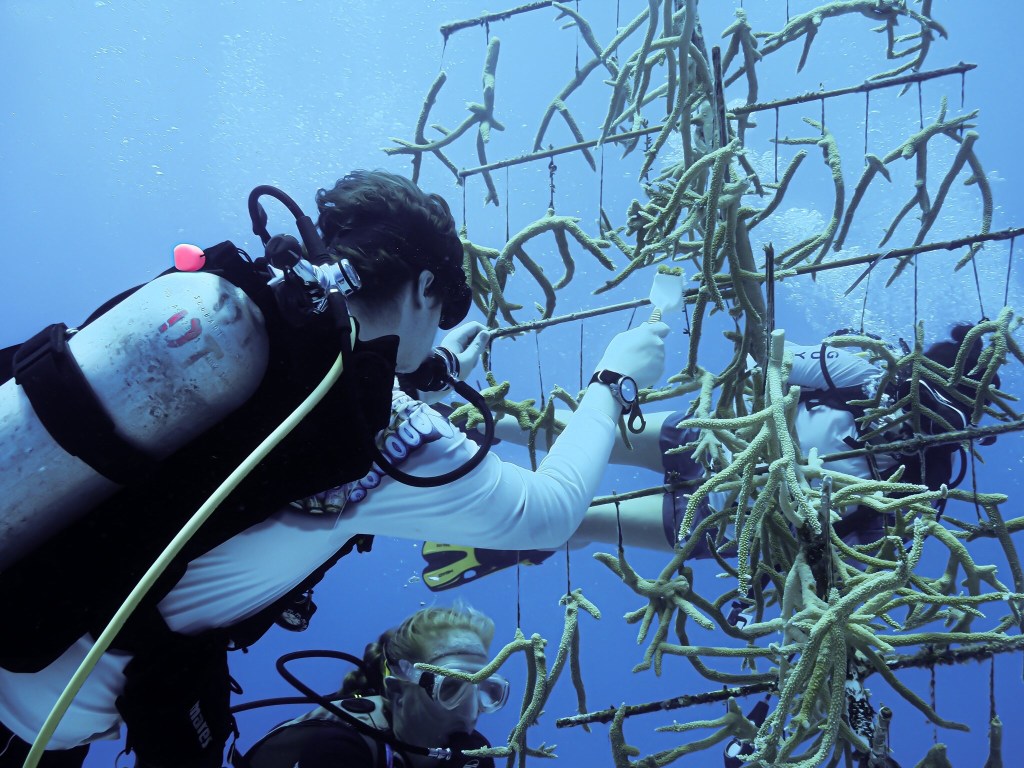
James and I qualified for our Nitrox certification this week.
Nitrox is air enriched with oxygen.
Scuba divers normally dive with compressed atmospheric air. This means it has a 21% oxygen content.
Now this is fine but one of the big risks in diving is posed by nitrogen. At depth it is dissolved from the air you breath into your blood. Where it can accumulate and form bubbles. In turn these bubbles can accumulate in joints or in your mussels.
These bubbles can cause a range of problems and can lead to decompression illness or the bends.
After drowning the bends is a diver’s biggest fear so much of what we do, the way we plan dives, surface intervals are all designed to reduce this risk. We ascend slowly and have safety stops to allow our bodies to purge of nitrogen.
However some remains in your system and over successive dives you accumulate residual nitrogen. This residual nitrogen has to be taken into account when planning subsequent dives and so places limits on what you can do, how deep you can go and how long you can stay down in order to minimise risk.
Nitrox offers a way to mitigate some of this risk and presents some real advantages over air for divers, ok so it poses a different set of risks but it’s a trade off and let’s face it we are diving which in of its self is pretty mad.
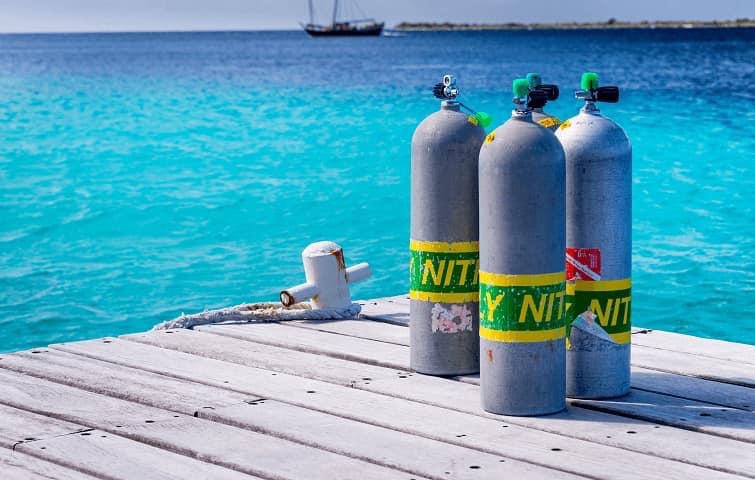
Nitrox is shorthand for oxygen enriched air.
Nitrox is any mix of air which has a greater percentage of oxygen than normal air e,g, 22%+ up to 40% oxygen.
The most common blend tends to be around 32% (a range from 30% to a little over 32%). Specialist divers and professionals use other mixes but recreational divers do not tend to.
By increasing the proportion of oxygen in your tank you reduces the nitrogen load your body takes and reduces absorption of the gas. As a result it means less recovery time on the surface between dives, longer time at depth* during repetitive dives and it also feels great, you feel less tired at the end of your dives.
* Recreational divers only go down to about 100ft. So here I am talking about 50ft to 100ft.
Greater depth, going below 100ft (120ft really) means additional training and special prep. As below 100ft there is the danger of oxygen toxicity which can cause convulsions and hallucinations. Not ideal. Increasing the proportion of oxygen with Nitrox ups this risk so it is not used bellow 100ft below in recreational diving. But above that it’s great!
Nitrox also changes what you can do in a dive day or when out on a boat.
Living and working in the Caribbean during the Pandemic has been an education.
We closed down early here, schools shut in March and remained closed for the remainder of the school year. Life went into deep freeze with strictly enforced Suppression Measures controlling all movement, all meetings and many aspect of everyday life.
What followed school closure and the move to distance learning was an experiment in education and flipped learning. We all had to adapt quickly to the pivot to distance learning and to the technologies available to us. As a government school we faced an enormous technological barrier as many of our homes did not have computers or even tablets.
Teachers had to find ways to effectively teach using commonly available tools like Zoom and WhatsApp. To find ways to ensure that the learning to date was consolidated and that some new learning took place.
The aim being to reduce learning loss.
Perhaps the biggest challenge was maximising engagement and keeping attendance high. Here the importance of community and the relationship between home and school came to the fore and proved to be the decisive element in making distance learning work.
From day one our mantra was about developing a learning partnership with parents (read significant adult, older sibling). They were to be our partners in every sense. We altered our planning so it was accessible to the layperson, we held weekly meetings with our class parents to review the week gone and plan the next one. We had one to one coaching sessions for parents of students with additional needs so they could more effectively support them.
We trained our community. As a result we achieved good levels of regular engagement with 75%+ of our students.
Students’ work was submitted by email, text, voice note and by photo. Feedback was by every method barring smoke signal!
We even had a system wide inspection carried out by our local equivalent of OFSTED to review the quality of what we were doing. It included lessons observations. Just let that sink in.
Staff gave everything long days and seven day weeks. They developed whole new ways of working. Whole class teaching and small groups through Zoom and Teams, a hybrid of synchronous and asynchronous teaching using whatever technology we could make work and supplementing it with paper packs and activities kept learning going.
Of course there were challenges and families that were reluctant or unable to engage and these became the focus of the work of the SLT. Multiple calls and discussions to slowly reel them into the partnership.
The year ended, for my team, with June but we ran on for an extra week to wrap up the year.
We were exhausted but I can not tell you how proud I am to have been part of the extraordinary group of educators that made it happen.
No, I am not going to claim it was the same as or as effective as being at school but given the challenges, the obstacles we faced it was incredible and an achievement one of which we can all be justifiably proud.
Principals have had to work throughout the summer break. Yes we have had a bit more of a work life balance and been able to take three day weekends but we have been working the rest of the time. Certainly we have worked far more than any other summer I can remember and that includes the times when one or another of my schools had major construction work going on in the break. Over the summer we have been planning how we reopen. But we are all well and we live in our little island bubble, I guess that’s just the price we pay.
The island has been incredibly successful at controlling the spread of Covid. Most of the population has been tested and we have moved to minimal suppression. In point of fact we could probably open the island internally and keep our borders closed. Life could go on as usual. Sort of.
But the key to the islands success, so far, has been caution. The Government, who have done an incredible job, are not about to throw away the sacrifices made to date by rushing to open. So we are planning a staggered return to school in August with only half the students returning. The rest will continue with distance teaching for a further two weeks before returning.
There will be no whole school assemblies, no mixing between classes, staggered lunchtimes and playtime, masks, gallons of soap and hand sanitiser, social distancing. Lessons on social distancing and a focus on unpacking and dealing with the emotional impact of Covid, shelter in place, school closure and reopening and once settled baseline assessments so we can see where we are and what we need to do.
Today I am sat here putting the finishing touches to our opening plan and guidance for our community and I am trying to work out do we bubble by class or by year group? I think classes but if we do should we put our twins (8 pairs and a set of triplets across the school) into the same classes? After all, surely living in the same home but being in separate bubbles during the day makes no sense.
I think I will take an hour or two off and have a dive and think about this quandary while I blow a few bubbles.





















 Under an Endless Sky